Home › About › People › Fellows › Schwartz
BERNARD SCHWARTZ FELLOWS
About the Bernard Schwartz Fellowship
2009 Fellows
2008 Fellows
2007 Fellows
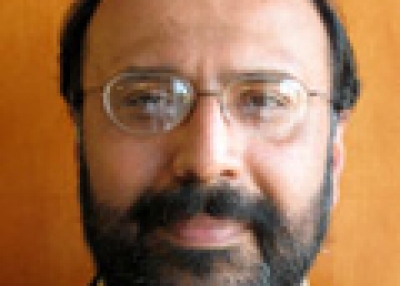
Dr. Hassan Abbas is currently a Bernard Schwartz Fellow at the Asia Society’s New York headquarters. Hassan joined Columbia University's South Asia Institute as Quaid-i-Azam Chair Professor in January 2010 and is also a Senior Advisor at the Belfer Center for Science and International Affairs at the Kennedy School of Government, Harvard University, after having been a Research Fellow at the Belfer Center from 2005 to August 2009. He is also a non-resident Fellow at the Institute for Social Policy and Understanding (ISPU), Michigan, and an Associate of the Pakistan Security Research Unit (PSRU), University of Bradford, in the United Kingdom. He received his Ph.D. from the Fletcher School of Law and Diplomacy, Tufts University and an LL.M. in International Law from Nottingham University, UK, where he was a Britannia Chevening Scholar (1999). Hassan also remained a visiting fellow at the Islamic Legal Studies Program at Harvard Law School (2002–2003) and as a visiting scholar at the Harvard Law School's Program on Negotiation (2003–2004).
His research interests are nuclear proliferation, religious extremism in South and Central Asia, and relations between Muslims and the West.
Hassan is a former Pakistani government official who served in the administrations of Prime Minister Benazir Bhutto (1995–1996) and President Pervez Musharraf (1999–2000). His latest book, Pakistan's Drift into Extremism: Allah, the Army and America's War on Terror (M.E. Sharpe) has been on bestseller lists in India and Pakistan and was widely reviewed internationally, including by the New York Times, the Boston Globe, Far Eastern Economic Review, The Hindu, and Dawn. He has also appeared as an analyst on CNN, MSNBC, C-Span, Al-jazeera, and PBS, and as a political commentator on VOA and BBC. His forthcoming book is Letters to Young Muslims on Science, Sovereignty and Sufis. Another book manuscript he is working on deals with Pakistan's nuclear program and its genesis. He runs WATANDOST, which is a blog on Pakistan and its neighbors' related affairs.
At the Asia Society, his work focuses on US-Central and -South Asia relations, especially in the context of political dynamics in Pakistan and Afghanistan. His research and writings also look at India-Pakistan relations and the potential US role in facilitating peaceful and friendly relations between the two South Asian rivals.
Recent publications and appearances on AsiaSociety.org
WATANDOST: Inside News About Pakistan and its Neighborhood
Belfer Center for Science and International Affairs page on Hassan Abbas
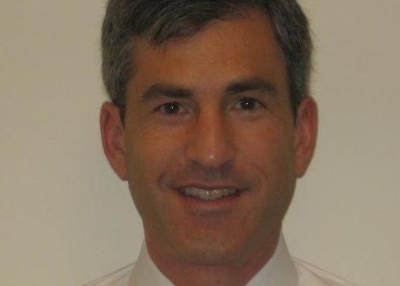
Dr. Verónica Boix Mansilla is a Bernard Schwartz Associate Fellow in Asia Society's Education department, focusing on global competency and the educational demands of our changing world.
She has an Ed.D. in Human Development and Psychology and a Master's in Education from Harvard University, and is the Principal Investigator of the Interdisciplinary Studies Project at Project Zero. Her research and publications focus on how students, teachers, and experts develop expertise in disciplines such as history, biology, and the arts, and how they integrate such perspectives to examine interdisciplinary problems of global significance (e.g., globalization, genocide, global health, climate change, or bioethics). Her research brings together theories and methods in cognitive psychology, epistemology, pedagogy, and sociology of knowledge.
Verónica has defined "global consciousness" and argued for its significance as an aim for contemporary education. She is examining this construct empirically in collaboration with the International Baccalaureate. As a member of the Asia Society-Council of Chief State School Officers working group, she has also contributed to the definition of global competency.
The Bernard Schwartz Resident Fellows Program
The Bernard Schwartz Resident Fellows Program seeks to help meet the large and growing need for a nuanced public dialogue on important issues related to the growing importance of Asia in the world and global economy by selecting Fellows to serve in residence at the Asia Society headquarters in New York or in its Washington Center.
Schwartz Fellows are selected from among the most respected leaders from Asia and the US, and serve up to twelve-month terms in residence. Candidates are drawn from a variety of fields, including former government officials, academics, business leaders, and journalists. The defining qualification for Schwartz Fellows is a record of distinction and a commitment to engaging the broader public in better understanding Asia.
During the course of their residencies at the Asia Society, Fellows engage in a variety of activities, including:
- • Present major public addresses at the Asia Society in New York and Washington, DC, with additional speaking opportunities at other Asia Society Centers globally;
- • Actively engage with Asia Society Centers in the US and Asia, as appropriate;
- • Regularly attend and actively participate in Asia Society programs;
- • Advise Asia Society staff on public program planning, directions, and potential speakers; and organize at least 2 programs conceptually;
- • Participate in major Asia Society conferences in Asia, including the annual Williamsburg Conference, Asian Corporate Conference, and Asia 21 Young Leaders Summit, as appropriate;
- • Media:
- - Regularly publish op-ed and other articles on topics related to Asia policy or US-Asia relations in major Asian or US publications;
- - Serve as a media resource on relevant, timely issues, while being willing to educate and speak about topics much broader than expertise area;
- - Propose at least two stories a week that the Fellow would be willing to speak to news press on;
- - Propose at least two pieces per month, one of primary interest to Asian publications, one to US or general;
- - Produce minimum of four additional in-depth features for AsiaSociety.org;
- • Serve as a focal point for the Asia Society's community of Fellows, including Associate Fellows;
- • Advise on training materials preparation and participate in at least four briefing/training sessions for Asia Society youth reporters (high school and potentially college-age journalism students who report on Asia Society events and international topics). These sessions may be held in person or online as video sessions with associated chats or message boards;
- • Assist in the Asia Society corporate briefing program;
- • Attend at least two programs a month at related institutions with the express purpose of making media contacts, introducing your expertise, etc.
Applications are accepted on a rolling basis. Positions for 2009 are already filled. If you are interested in applying for 2010, or for more information, please send your cover letter, CV, and contact information to Ms. Hee-Chung Kim at hkim@asiasociety.org.